Exclusive Interview with Edmund White by Richard Canning
+and+David+Kalstone+(right).jpg) New York City Boy
New York City Boy: A Conversation with Edmund White, on the US publication of City Boy, 9th October 2009
By Richard Canning
Photo of Edmund White in Venice in 1974, with Alfred Corn (left) and David Kalstone (right)
RC: You open with a description of 70s New York: 'grungy, dangerous, bankrupt' but artistically in its zenith. That's pretty evidently meant to contrast with present-day Manhattan. Are there any major cities today which feel especially creative?
EW: I've just spent two months in Madrid, which seems vibrant and alive, full of young people who inhabit the center and who stay up all night, a gay life that is flourishing... New York seems to have lost its edge.RC: By page two, you're hanging around, hoping to bump into Susan Sontag or Paul Goodman, author of the journal Five Years, a big deal in its day for its openness about his bisexuality and erotic adventures. The contrast in subsequent reputations of this pair is rather poignant, isn't it? As you point out, Goodman is scarcely recalled today, and almost never read. I wondered if, in the seventies, when the "newness" of gay art and culture and writing was so obvious, you remember having some sense of the people and works that would last? And, in the thirty years that have followed, have those instincts clarified or changed much?
EW: I think I thought that Sontag's reputation would last because she had so much integrity, was so high-minded and so uncompromising - and because every line she wrote contained a unit of thought. I think I was right. Though people might gibe about those very qualities now, nevertheless she remains a beacon of high culture and seriousness. I also felt that John Ashbery and Elizabeth Bishop and James Merrill were all making lasting contributions, though to my surprise Bishop has nosed her way to the front, and Merrill is now in third position. So I guess I'd say I could spot a winner but couldn't predict the order of celebrity they would eventually assume.RC: One of your first lovers then, Stan, you describe as having a 'classic' look of beauty which was 'generally acknowledged.' Rather cleverly, I thought, you don't describe him in too much physical detail; the reader can then supply his or her own version of that classical beauty. Do you accept that these things are culturally specific, even as they feel universal, eternal or classic?
EW: I guess we all prize virility, even a joli-laideur now, more than we did back then. Stan had a John Barrymore kind of classical handsomeness that would still be appropriate to a marble statue.RC: You confess in the book to having been politically apathetic: You also imply that this apathy was widely shared; that nobody thought of there being a gay community or society. Would you say that artists in particular shied away from political engagement? And how much do you think AIDS would change all of this? (After all, you co-founded GMHC).
EW: I felt generally alienated from the culture and its ideals. I was terribly cynical and astounded that people got so worked up over a "little thing" like Watergate or Chappaquidick, or even cheating over Twenty Questions. I assumed everyone was cheating all the time. This cynicism and a complete sense of disaffection and disabuse kept me away from politics in any form. Larry Kramer sort of shamed me into joining (and eventually heading) GMHC, but I was happy to duck out as soon as possible. Partly I had an artist's fear of unnecessary and time-consuming entanglements that other people could do just as well or better.RC: One of the best things about the book is its tender, considered account of long-term friendships, which 'feed the spirit' - in particular, through the examples of Marilyn Schaefer, still with us, and David Kalstone, who died. Perhaps this is a topic which fits uneasily in fiction, since its very constancy risks being undramatic; it's easier to think of fiction bringing to life dramatically the experience, say, of the betrayal of friendship. Were you aware of this book offering the chance to document such friendships, finally?
EW: It seems to me that many people count relatives and mates as their best friends. Some people are extremely attached to childhood friends. I suppose the chance of meeting people later in life and cultivating an intense friendship with them is rare - and perhaps gays, with their (previous) lack of interest in family life and marriage, were best suited for developing these intense friendships later in life (even if "later" is defined as occurring in one’s twenties or thirties).RC: You describe escaping to Puerto Rico with Stan for holidays, and sexual release there. I suppose it goes without saying that racial politics in gay culture has changed a lot, in the last thirty years. Would you comment? And do you worry about how you represent the racially other in your writings?
EW: Of course there is rather a "colonial" sound to my Puerto Rican adventures, but I think most Blacks and Puerto Ricans, for instance, would rather be loved and admired for the wrong reasons than ignored altogether. Anyway, City Boy is quite clear about the moment it is concentrating on. It would be ahistorical to attribute to my narrator attitudes that didn't come into being till much later.
RC: I loved the comment that gay "intellectuals" in the seventies found that, through their learning, they simply had more evidence arguing against their own existence - they could 'torment' themselves 'with extra zeal' with Freudian ideas. On the other hand, extensive reading in literature has often been described as liberating, particularly at this time, for its offering of role models in fiction and so on, if not always positive ones. Did you encounter, let's say, untutored gay men whose self-understanding seemed more positive and mature than others', in Manhattan in the seventies? And were the books with gay themes that people devoured appreciated, would you say, for featuring gay content at all, or (especially) for featuring positive gay storylines?
EW: I think I was thinking of "non-intellectuals" who weren't aware of Freud's prejudices against homosexuality as a form of character disorder or infantilism. They were the lucky ones because they didn't dwell on all the ways in which they were "sick." I wasn't (as you suggest) thinking about those who were versed or unversed in gay literature written by gays. It's true that if all you'd read was Giovanni's Room or Death in Venice or even Proust, you'd come away with a strange view of gay experience. On the other hand, Andre Gide's journals were nourishing because he seemed a self-respecting man with far-flung interests.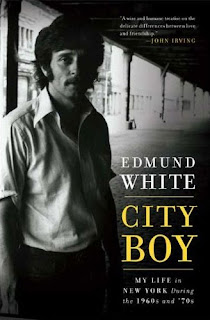 RC:
RC: You mention revering writers such as Elizabeth Bowen and Graham Greene, considered to have rather unelevated prose styles; 'readable' authors, as well as Henry Green, whose prose is somewhat more challenging, surely. Your own fiction has often been viewed as split into two camps – the ‘readable' autofictional works, and the more baroque, stylised novels such as Forgetting Elena, Nocturnes and Caracole. Would it be fair, by now, after Fanny and Hotel de Dream, to argue that the 'readability' has won out in your case?
EW: I suppose I lost interest in the degree to which prose seemed "experimental." What interested me in Graham Greene was the extremely subtle use of figurative language (he's really the best in the business for similes and metaphors). With Bowen it was the easy way in which she could embed apothems in her running narrative, something I've carefully emulated, though it gives a "moralistic" and slightly old-fashioned tone to the writing. Henry Green is a comic genius and his seemingly rattle-brain (but actually very scheming) women are hilarious, and his idiosyncratic use of dialogue is dazzling. I also like his way of letting a sinister subplot slowly emerge. I agree with Ian McEwan that these are writers who've been upstaged in literary history by more obvious experimentalists such as James Joyce and Virginia Woolf, though Bowen and Green are better than Woolf.RC: You make a true, and rather comic observation: that gay men always feel too old, wherever they are, whatever they are doing. It's poignant, because at first that sounds like a terrible curse or imposition. But once you've appreciated the truth of it, it could become liberating, no? Particularly for... a relatively senior gay man... (Coughs).
EW: Yes, it is liberating to put all that worrying behind one. Now I have a Spanish boyfriend who appreciates me because I have white hair and I'm chubby - I'm his type! I never would have guessed that when I was young. When I look at the photo Alfred Corn just sent of me when I was thirty-four, I remember I hated my looks then, and thought I was ugly, though in fact I was quite presentable.RC: I wanted to ask if there's anywhere in the US you could imagine living today, outside Manhattan? City Boy seems to suggest not. You spent a period in San Francisco, and even that didn’t work out...
EW: I always get this lonely forlorn feeling in other American cities, though I do like to spend a month a year in Key West, and could easily spend more time if I had the money or opportunity. It might be fun to teach for a semester in New Orleans or Austin, but otherwise I'm not too tempted by other cities, especially since I don't drive.RC: There's a provocative moment, where you describe the 'three great geniuses of the twentieth century' as 'Stravinsky, Nabokov and Balanchine.' I laughed, because it follows a comment about New Yorkers at that time being 'still obsessed with a hierarchy of the arts and the idea of the Pure.' So, here's another hierarchy! I don't expect you to back down. But it's intriguing that you linked these three because of their imperial Russian ancestry, their time in France and their later careers in America... Could you say something more about what you mean here by 'genius', or about the way this succession of transplants may have informed it?
EW: All three of these geniuses are Romantics, or at least are addicts of beauty and a certain dreamy vision of beauty. But at the same time all three are witty and crisp and decidedly "modern." Balanchine, in his big white ballets like Symphony in C, or Nabokov in the love passages in Lolita and Stravinsky in the romantic grandeur of The Fire Bird... In these works, we feel the grandeur and scope of Imperial Russia. But all three could be very angular and witty as well - Stravinsky in Jeu de Cartes, Balanchine in Agon, Nabokov in Pale Fire. And all three are always renewing themselves - Nabokov in his very late Look at the Harlequins! (which is a delicious parody of autofiction and its coarsest preconceptions), Balanchine in a big story-telling ballet such as Don Quixote (precisely the opposite of everything he'd otherwise stood for) and Stravinsky in his late, twelve-tone scores such as Dumbarton Oaks. I think all three were "light" and flexible and unsentimental, though very romantic because of their years of contact with French culture.
RC: I can't have been the only person waiting for your take on Susan Sontag, which turns out to be very balanced, and nuanced. You've space for her good qualities ('protective and generous', etc.). On the other hand, I wondered about some of the apparently neutral observations: 'Susan was also like a queen in that she had a full life, largely ceremonious'; 'Her genius was in saying the obvious in a strong and dramatic manner.' This one, though, took the biscuit for humour: 'She should have been given the Nobel Prize. That would have made her nicer.' Ouch! Could you reflect on the uses of humour in the memoir form? Have you erred, ever, or been misinterpreted in the way you've laughed about people from your past, or your interactions with them?
EW: Of course the people I write about and their friends are never happy. James Grauerholz just wrote a pretty wounded e-mail to me about my treatment of him and William Burroughs. He thinks I failed to see their love for each other. He also thinks I didn't really "get" Burroughs. Craig Seligmann, who wrote a book about Sontag and Pauline Kael, said I was trashing Sontag, which shocked him since I'd already attacked her in Caracole. So I guess we should ask the victims of my humor what they think. I, of course, think I was pretty even-handed. I was determined to be objective or at least fair about Sontag...
 RC:
RC: The book ends with AIDS, which, once again, introduces the essential nature of human friendship. It's a logical close, and leads to your departing for Paris, which you've sketched a little already (in Sketches from Memory, also published as Our Paris). It also brings us to the present, in that we know that the author of City Boy is now ensconced in Chelsea. Where do you go from here? It feels as if this may have drained the pool of material for memoir, at least for now. Do you have a fictional project in mind?
EW: I'm a hundred pages into a novel about a straight man and a gay man who are best friends. I'll follow them through three decades. Then I'd like to do a memoir about Paris in the 1980s. And eventually a memoir about my nephew, Keith Fleming, who committed suicide last spring, and his mother, my sister, whom I've almost never written about.
RC: So much to look forward to. Thanks so much for your time.
City Boy: My Life in New York During the 1960s and 1970s appears from Bloomsbury in the UK on 4th January 2010. Richard Canning has known Edmund White for over fifteen years. He interviewed White for his first book, Gay Fiction Speaks (Columbia University Press, 2000), and included his story ‘The Painted Boy’ in the anthology of gay fiction Between Men, as well as the story ‘An Oracle’ in an anthology of fiction about AIDS, Vital Signs (both Carroll and Graf, 2007). White has also contributed an essay on Marguerite Yourcenar’s Memories of Hadrian to Canning’s latest collection, 50 Gay and Lesbian Books Everybody Must Read (Alyson, 2009). In the same book, White’s novel A Boy’s Own Story is discussed by San Franciscan author Robert Gluck. This year, Canning has also seen the publication of a second gay fiction anthology, Between Men 2 (Alyson), and a brief biography of E. M. Forster (Hesperus, November), following his first, on Oscar Wilde (Hesperus, 2008). He can be contacted at r.canning68@googlemail.com.
Labels: Author Interview
Interview with Rupert Smith by Radcliff Gregory
 Rupert Smith isn’t your average gay novelist – not that there is anyone in danger of achieving that dubious accolade. He has managed to become not one, but three separate critically acclaimed novelists. After nine top-selling novels, he recently won the ‘Erotic Oscar’ for work published under his James Lear pseudonym. This is in addition to working as a journalist for 25 years, interviewing hundreds of celebrities, and ghost writing autobiographies. Apart from his regular contributions to Gay Times, Smith now mainly focuses on writing novels. His next novel, Silk, is released this summer.
RG: What does 2009 hold for you?
RS: A lot! Silk - a big blockbuster set in the worlds of fashion and the law. Then Man’s World (November). Soon I’ll start work on the 2010 James Lear novel. Later this year
Cleis is reissuing the first ever James Lear novel, The Low Road (out of print for ages and changes hands on the second-hand market for a lot of money)!
RG: You spent many years working in the media industry. Were you consciously collecting material for a novel?
RS: Yes, sort of - I met so many interesting, ridiculous, amazing, annoying people in that world, I kept saying “If you read this in a novel you’d never believe it”.
RG: What inspired I Must Confess?
RS: The character was based on a good friend of mine, who was an aspiring actor-singer, who never made it – but in his own mind he was always a superstar. When he passed away I thought about him a lot and thought he’d make a great basis for a character. The book was also hugely informed by the celebrities I’d interviewed and their agents, managers etc.
RG: What is it like to be two writers simultaneously?
RS: It helps me to differentiate my output: Rupert Smith is basically gay literary fiction with a strong comic element, James Lear is gay erotica, and the new one is commercial fiction. Writing under a different name freed me from the stifling concept of “art” and made me realise that you have to put markets first, yourself second. Once you’re successful you can do what you like and serve Literature, but you have to get to that position first.
RG: Why do you write under two separate identities?
RS: When I started writing porn, I was working for the BBC and I didn’t think they’d take too kindly to it, so I used a nom-de-plume.
RG: Did you always intend to write erotic fiction?
RS: I always have written erotic fiction, from when I was a teenager writing wank fantasies about my mates in a secret diary. I did a bit for mags. The James Lear stuff came about because I was unable to get another novel published. It sold very well.
RG: Sex is notoriously difficult to write well.
RS: I don’t know why so much sex writing is so bad. I think it’s because people try to be literary, which is absolute DEATH in erotic writing. A cock is a cock, not a veiny maypole or a throbbing thrill-hammer. You have to have narrative context: danger, a sense of the forbidden, a frisson of guilt or power. Two people getting off is not very sexy in itself. And you have to have humour to defuse the essential ridiculousness of the exercise.
 RG:
RG: Does the publishing industry understand there’s a market for queer fiction?
RS: Categorically. the publishing industry does NOT understand. Hardly anyone in the UK is publishing gay stuff, apart from a handful of literary writers like Sarah Waters, Alan Hollinghurst. Nothing about the world we live in now. It’s terrible – our stories and experiences are going unrecorded. This is why I wrote Man’s World and I had a hell of a job to find a publisher for it! No major publisher has the guts to bring out a gay list.
RG: What inspires you to write?
RS: For the porn, I take a favourite literary model and rework it with a lot of sex. The characters come largely from men I see at the gym, or people I know. For the commercial, I take good solid situations and spin out a, melodramatic, sexy, funny yarn. For the Rupert Smith stuff it’s more personal. Fly on the Wall was inspired by TV “docudrama” and the weird people I see walking past my house. Service Wash was inspired by a big job I did on EastEnders, and years as a TV critic for the Guardian, fantasising about what could go wrong with a programme like that. Also from my observations of the gay scene.
RG: What about the gay literary evenings?
RS: The House of Homosexual Culture is a forum to explore and celebrate queer history and culture. We’ve done events on subjects from disco to drag, Aids, politics, porn, punk, the law, and literature.“Live journalism”. Lots of exciting stuff coming up. We’re resident at Southbank Centre now, a great honour. One of the aims of this project was to bring the generations together. To get young people interested in their own history, which is in danger of being forgotten, and to give respect to older people who earned us the freedoms we enjoy today. See
http://www.southbankcentre.co.uk/festivals-series/house-of-homosexual-cultureRG: Do you think it would be a positive thing to reinstate Polari in the Queer vocabulary?
RS: It never died! I use it constantly.
RG: Tell me about your next book.
RS: Man’s World is set in 00s gay London, and 50s queer underworld when being gay was illegal, it’s a dual narrative that joins up when one of the survivors of the “old” world meets the narrator of the “new” world. It’s about how much has changed in 50s years, and how little. It’s very funny and sexy but it’s also very romantic and has some serious points to make. I met a lot of great people in their 70s and 80s who witnessed gay life in the 50s and they were massively inspiring.
Radcliff Gregory is the author of Everywhere, Except…, and the sold-out Fragile Art, and Figaro’s Cabin (under a pseudonym), and also anthologised in Chroma, Poemata, Coffee House and Poets International literary publications, and a dozen books by publishers including Crystal Clear, Forward Press and Poetry Now. Outright winner of six UK poetry competitions. Also writes non-fiction articles and essays on literary criticism, literature, disability and gender issues. Currently organising Polyverse Poetry Festival, which he founded. He also tries to find time to pull in a little PhD research at Loughborough University. Labels: Author Interview
Interview with Drew Gummerson by Liam Tullberg

Author
Drew Gummerson'I fell over in the ladies' loos,' says Drew Gummerson of the launch party for his new novel, Me and Mickie James (
Jonathan Cape). 'I don't remember that, but I remember it was a great party.'
Me and Mickie James is Gummerson's second novel following 2002's, The Lodger, and perhaps you'd think things would be easier this time around, more comfortable. But, no, he says he was more nervous about the release of the latter than the former.
'There's more pressure this time,' he says. 'I mean, I've got an agent, a publisher and a publicist. There are a whole lot more expectations than last time, and for a while I was really nervous about the book coming out, almost to the point that I wasn't enjoying the anticipation. But with the launch, having my friends and family around, that was when I started to relax.'
Me and Mickie James is a gay love story between the anonymous 'Me' and, yes, Mickie James set to a soundtrack of pop music and a backdrop of London, Europe and Iraq to name but a few. It's uplifting and funny. And original since Gummerson has cast a hunchback as one of the two protagonists.
'I've always liked writing about deformities,' he says. 'I once wrote a short story about a boy who stole another boy's penis, and another about a man who loses his feet.'
Me and Mickie James was finished two years ago and was soon sent to an agent who, though initially keen on the idea, ultimately refused the novel.

'I felt let down,' he says of the experience. 'And I suppose I was a bit depressed because I didn't write for a year after that.'
But in the hands of another agent, who loved the book, it was soon on the way to prestigious publishing house, Jonathan Cape and, as of last month, is on the shelves for the book buying public.
Now working for the Leicestershire Police, Drew works shifts that allow him time to write in the morning, his much preferred time.
'People at work ask if it's dead boring writing all the time,' he says. 'I think they think that it's dull if you're working on your own, but I really like it. I love the feeling I get after finishing the first draft. I mean, being published is great, of course it is, but that excitement of getting a story down from start to finish is something else.'
Now with two novels written and short stories appearing in a variety of anthologies including the Arts Council Anthology of Stories, Drew's in the process of publicising Me and Mickie James while continuing new work.
'I've started work on another novel and one of my short stories is going to be in Tell Tales 4, Global Village,' he says. 'I'm also taking part in the Summer Sunday in Leicester, a poetry and literature festival.'
It's busy times ahead for Drew, but good times too. What deformity he'll write about next, we'll just have to wait and see.
Teeth, a short story by Drew Gummerson will be broadcast on BBC Radio 4 in October. Keep an eye on his website for further details.
Liam Tullberg is currently working on his novel, Keeping You A Secret, and can be contacted through www.liamtullberg.comLabels: Author Interview
Interview with Anne Brooke by Liam Tullberg
Author
Anne Brooke Having written seven novels, Anne Brooke is an author with passion. In A Dangerous Man and Maloney’s Law, she focused on the gay central characters of Michael Jones and Paul Maloney, men who became her alter-egos while she wrote them. Here she shares her thoughts on their stories.

Tullberg: Anne, your novels, Maloney's Law and A Dangerous Man both have gay male central characters. What made you choose these protagonists?
Brooke: Their voices – Michael in A Dangerous Man and Paul in Maloney’s Law – were both so strong in my head that it would have been almost impossible not to choose them. A Dangerous Man came first and Michael was a character I’ve always wanted to write about. Writing him meant I got to know the dark side of myself a lot better.
With Paul, I dreamt the first scene in Maloney’s Law one night, woke up in the morning and simply wrote down that scene. Everything came from there. Actually, in many ways, Paul is similar to Michael, and just as screwed up, but as he’s older he’s more mature and able to cope better with his life by using humour. Something I suppose I’ve learnt for myself. I hope!
Tullberg: Well, they do say write what you know. So, how and why did you choose to write in first person perspective?
Brooke: I always write my gay male character novels in the first person perspective and my straight/bisexual female character novels in the third person. I find it very difficult to think like a woman and identify far more easily with Michael and Paul than I ever do with my female main characters. In fact some of the scenes in A Dangerous Man and in Maloney’s Law did, in effect, happen and I just rewrote them from my main character’s perspective. The “I” there in those cases is fairly interchangeable with me.
Tullberg: That’s really interesting. Did you do much research to get into the mind of these characters?
Brooke: I did very little character research as such – I just take the things in my own head which are hard, if not impossible, to express as a “UK British female” and express them in a male persona. It’s a relief to have some of this stuff out in the open, I can tell you! In many ways, it’s more a question of getting them out of my mind and onto the paper, rather than me getting into their minds. I think we’re already fairly joined at the hip – somehow.
Even now, I find myself in situations at work or in my personal life and wonder how Michael/Paul would deal with this or that. And, yes, I do talk to them still. Especially Michael. I suppose in that respect, it’s a way of tapping into my own strength and cussedness and using both in a way which I can’t do when I’m being “Anne”. That said, I’ve always enjoyed reading novels with strong-minded gay male characters, and have done from a very early age. I must be the only person I know who read all of “Dance to the Music of Time” before she was 15. And these days reading anything by Maria McCann, Patricia Duncker or Barry McCrea is always fantastic research!
In terms of other research, it’s fairly organic. I always do the writing first, then highlight issues I need to check out or go and investigate afterwards. For instance, after the almost-final version of A Dangerous Man was done, I went round London with my husband and pinpointed and photographed areas which meant something to Michael – eg Jack’s house, the gallery, where Michael starts off living etc etc. It made it more real, and I wanted to get London very much into the book, as it’s haunted me ever since I lived there in my 20s. I’ve always thought of the city as a very dangerous place and I hope that comes over in the novel too.
Tullberg: Yes, it does. Having read the novel, I can see that the city itself it almost as much a character as those with dialogue and actions. In regards to the development of your work, were the results what you had expected?
Brooke: No, to be honest. I didn’t think A Dangerous Man would be quite as dark and violent as it is. As I’ve already said, it’s certainly taught me a lot about myself. It also went through extraordinary amounts of changes. At the beginning, Michael was a cleaner rather than an artist, as I didn’t have the courage to believe I could carry it through if I made him into something that I didn’t know much about. When The Literary Consultancy persuaded me to make him into something more interesting, I took that step, wiped out 80-90% of what I’d written and then started again with him obsessed with his art. At that point, it was strange that the parts where he’s drawing became simpler than I’d anticipated – I just wrote about his drawing as if I were writing about writing. If you see what I mean. Which means that Michael’s anger, his obsession, his passion about his art, his incredible frustration with the business he’s in is actually mine. In many ways, I made myself more vulnerable in Michael than I have in any of my characters. It actually became quite frightening putting all that in, as well as exhilarating.
With Paul, yes, the results were nearer to what I’d thought the novel would be. The things that surprised me were how much of a “now” feeling the novel has – everything Paul does is done in the current time, so the whole novel is written in the present tense. The reader sees almost everything (excepting two flashbacks) as it happens to Paul. In fact this concept of time became a vital part of who he is, and his obsession with trying to control it. The other thing that surprised me with Maloney’s Law was when I was about one-quarter of the way through, I was getting very twitchy and knew something was missing, something was wrong with it, though I had no idea what. Then one morning, I woke up and heard a voice in my head saying, as clearly as if there had been someone else in the room: what about my sister? At that point, everything became clear and I had the key to Paul’s character – once I’d written her in, the novel took on a whole new life. I really enjoyed it. In fact, Maloney’s Law is probably the novel I’ve enjoyed writing the most, whereas A Dangerous Man is possibly the novel where I gave most away.
Tullberg: Having looked at your website, I see that Maloney's Law is set to be published in the States. That must be an exciting prospect.
Brooke: Very much so! So far it’s been a joy to work with PD Publishing, and I’m very glad that they chose to take it on, especially as they specialise in gay/Lesbian fiction. I’m also hoping that having a novel in the States will help widen my readership a little, as I like to think I might have something to offer (when I’m feeling confident, that is!), and it seems easier to sell gay novels in the US than it is in the UK. At least, that’s certainly been my experience. I’ll have to see!
Tullberg: I’ve got my fingers crossed for you. Now, you’ve been writing for seventeen years. What's your writing routine like? Do you have any strange habits when it comes to putting pen to paper/fingers to keyboard?
Brooke: In terms of fiction, I used to aim for 2000 words every writing day (I write two or three days each week when I’m not doing my paid job), but this became too much. So if I can do 1000 words in a day, then I’m happy. It keeps the whole thing moving – if I stop for too long, it’s much harder to get back into it. I tend to write fiction straight to the screen (although this can vary if I feel I need the extra stimulus which comes from doing it differently), but write poetry out in longhand first before transferring it to the computer.
I do always have a writing “tic” which keeps me going. I used to fiddle with a broken green rubber band in between typing, but it just became too fragmented. Sadly! Now, I can’t start my writing day without playing two games of computer Solitaire, and I always go back to this if I have a mental pause. It helps me sort plot out when I’m doing something else, I think.
Tullberg: That’s great. So, Anne, what advice would you give to someone poised to write their first novel?
Brooke: Write what YOU want to write, not what the market says you should write. First and foremost, you write for you, not other people. If you get that right, then you’ll produce the best book that you can. But if you try and change what you have inside to suit others’ expectations, then you’ve failed at the first hurdle. And, hey, you don’t have to write every day either – it’s a myth! Most of all though, enjoy it. Apart from your relationship with your partner/family/friends, it’s the best thing ever.
Liam Tullberg is currently working on his novel, Keeping You A Secret, and can be contacted through www.liamtullberg.com
Labels: Author Interview
+and+David+Kalstone+(right).jpg) New York City Boy: A Conversation with Edmund White, on the US publication of City Boy, 9th October 2009
New York City Boy: A Conversation with Edmund White, on the US publication of City Boy, 9th October 2009


